
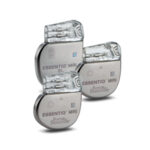
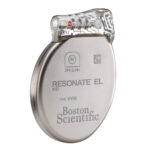
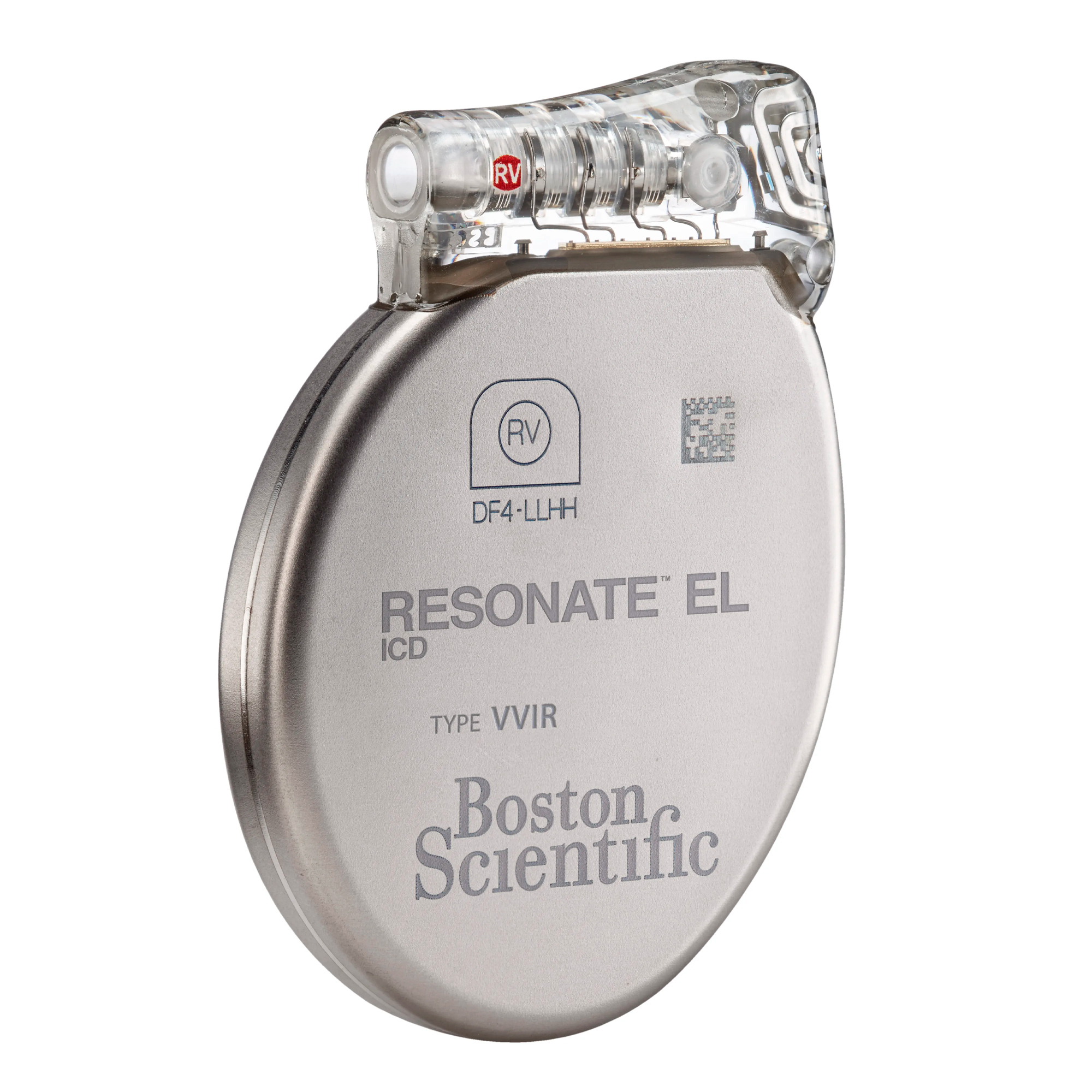
IMPLANTABLE CARDIOVENTRICULAR DEFIBRILLATOR SINGLE-CHAMBER
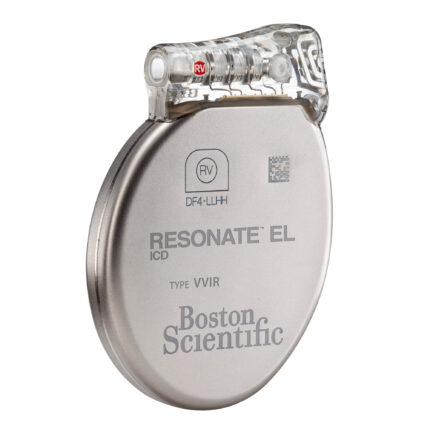
An MRI-compatible single-chamber implantable cardioverter-defibrillator allows a patient with an implanted system to undergo 1.5 T and 3 T MRI scans without restrictions on the scanning area (including the heart area) or the duration of the MRI scan procedure, provided that the device is implanted with MRI-compatible electrodes and the manufacturer’s requirements for MRI scans are met.
Device: connectors: IS-1, DF-4; weight: 70.7 g.; volume: 68.9 cm3; Dimensions: 74 mm x 54 mm x 9.9 mm.
Materials in contact with human body tissues: Titanium, polyurethane, silicone rubber
Body shape: Physiological, thin-profile, less than 1 cm thick.
High-capacity battery with ENDURALIFE™ technology, providing a service life of more than 17 years.
The device’s battery capacity is 1.8 Ah.
The estimated service life is 17.1 years under the following conditions: VVIR stimulation mode, 15% stimulation, base frequency of 60 per minute, pulse duration of 0.4 ms, electrode impedance of 700 ohms, stimulus amplitude of 2.5 V; accelerometer on; two capacitor charges to maximum energy per year; VEPG recording is always on.
The device has wireless telemetry and wireless ECG functions.
Features: automatic measurement of stimulation thresholds and automatic adjustment of stimulation parameters when thresholds change.
Frequency adaptation function.
Two sensors: an accelerometer and a physiological respiratory sensor.
Ventricular rate stabilization function.
Up and down rhythm smoothing function, independently programmable. Advanced set of algorithms for the diagnosis and monitoring of heart failure Heart Failure Sensor Suite.
Function for the diagnosis and monitoring of nocturnal apnea AP Scan.
Maximum programmed shock energy 41 J.
Maximum delivered shock energy 35 J.
Maximum accumulated shock energy 41 J.
Standard capacitor charge time to maximum energy (41 J) at the beginning of service 8.4 sec.
The maximum number of shocks per episode is 8.
Stimulation modes: VVIR; VVI; VOO; OFF.
Stimulation parameters. Stimulation amplitude is 0.1 – 7.5 V.
Pulse width: 0.1-2.0 ms.
Automatic measurement of amplitude and adjustment of sensitivity thresholds based on the PZ.
Sensitivity: Auto (AGC), 0.15-1.5 mV.
The polarity of the pancreatic stimulation is integrated bipolar.
Maximum sensory frequency (MSR) – 50-185/min.
The maximum stimulation frequency (MPR) is 50-185/min.
Audio warning signals: during capacitor charge, when the electrode/device integrity is violated (when the electrode impedance limits are exceeded, when noise appears on the electrode, when the recommended battery replacement time is reached, when the charge time is exceeded at the end of the service life).
The Heart Failure Sensor Suite diagnostic and monitoring algorithm complex provides multifactorial physiological and individualized clinical data for making more informed decisions in the treatment of patients with heart failure.
The diagnostic trend function provides an overview of the implanted system and the patient’s condition over the previous 12 months, with graphs that display long-term clinical trends in the patient’s condition and the performance of the device and electrodes, such as the frequency of arrhythmias, heart rate, heart rate variability, patient activity, and device-assisted therapy episodes (antitachycardia, defibrillation).
Parameters for detecting tachyarrhythmia:
Detection of FJ: detection interval is 240-462 ms.
Detection of fast VT: detection interval is 273-545 ms.
Detection of VT: detection interval is 300-667 ms.
Detection criteria: heart rate (detection interval), regularity, morphology of the QRST complex, algorithms for differentiating ventricular tachycardias from supraventricular tachycardias, stability, and sudden onset.
Antitachycardic stimulation: automatic switching of the ATS before the capacitor is charged (Quick Convert ATP).
Therapy type: Burst; Ramp; Scan; Ramp/Scan; Off.
Number of pulses: 1-30.
R-S1 interval =(%RR): 50-97%, step 3%. Minimum interval of ATC V-V 120-400 ms.
Technology to reduce the number of unjustified shocks AcuShock.
RhythmID and RhythmMatch algorithms for differentiation of FJ / FT / NJT.
Algorithm for recognition of electromagnetic noise on the electrode.
Algorithm for alarm when the electrode is damaged.
Battery technology ENDURALIFE™ with increased capacity increases the service life and possibilities of using the functions and algorithms of the device:
estimated service life is 17.1 years.
Defibrillating electrode: MRI compatible up to 3 T, DF-4 connector, active fixation; presence of a steroid, standard electrode length of 59-64 cm, maximum electrode diameter of 7.3 Fr.
Introducer: percutaneous, size: 8 Fr