
IMPLANTED CARDIOVASCULAR DEFIBRILLATOR WITH CARDIORESYNCHRONIZATION THERAPY FUNCTION MRI
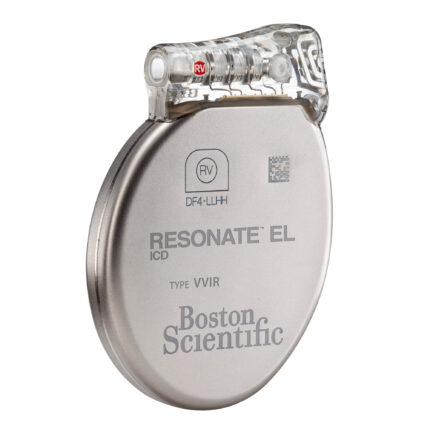
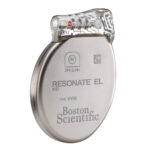
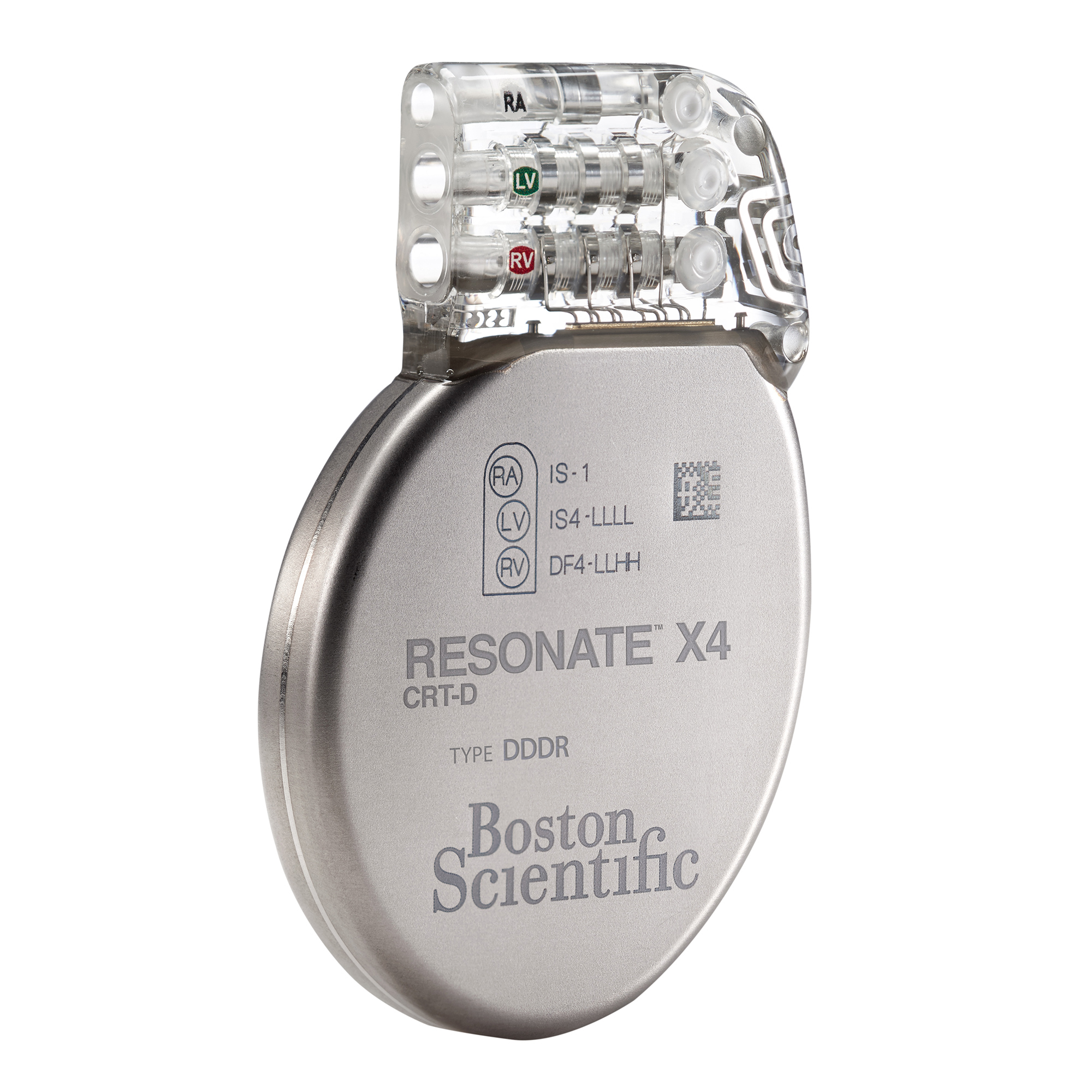
Three-chamber device for cardiac resynchronization therapy with cardioversion-defibrillation function (CRT-ICD)
MRI-compatible cardioverter-defibrillator for cardiac resynchronization therapy allows a patient with an implanted system to undergo an MRI scan up to 3 T, without restrictions on the area (including the heart area) and the duration of the MRI scan, provided that the device is implanted with MRI-compatible electrodes and the manufacturer’s requirements for MRI examinations are met.
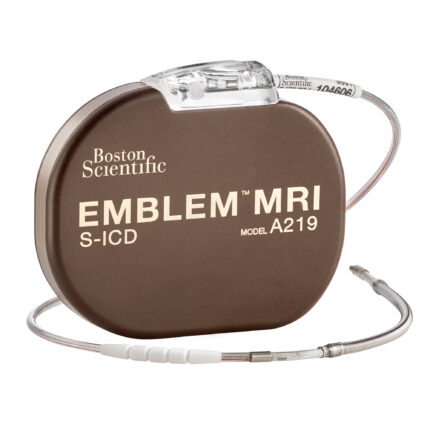
Device: connectors: IS-1, IS-4, DF-4; weight: 73.8 g.; volume: 32.5 cm3; Dimensions: 82 mm x 54 mm x 9.9 mm;
Materials in contact with human body tissues: Titanium, polyurethane, silicone rubber
Body shape: Physiological, thin-profile, less than 1 cm thick.
High-capacity battery with ENDURALIFE™ technology, providing a service life of more than 13 years. The device’s battery capacity is 1.9 Ah.
The estimated service life is 11.9 years under the following conditions: DDDR stimulation mode, 100% biventricular stimulation, 15% atrial stimulation, base frequency 70 per minute, duration of atrial, right and left ventricular pulses 0.4 ms, electrode impedance 700 ohms, stimulus amplitude PP / RV = 2.0 V, LV = 3.0 V; accelerometer On; two capacitor charges up to maximum energy per year; recording 3-channel EEG with Onset constantly on.
Wireless telemetry and wireless ECG function.
Availability of functions: automatic measurement of stimulation thresholds and automatic change of stimulation parameters when thresholds change in all 3 chambers;
Frequency adaptation function.
Availability of two sensors – an accelerometer and a physiological sensor of minute ventilation/respiratory sensor.
Function of adaptation of the AV interval to the heart rate.
Function of response to the conduction of AF/PT to the ventricles (ATR). Atrial fibrillation response function (AFR).
Ventricular rate stabilization function.
Up and down rhythm smoothing function, independently programmable.
Vector Guide automatic test.
Advanced Heart Failure Sensor Suite of algorithms for diagnosis and monitoring of heart failure.
AP Scan night apnea diagnosis and monitoring function.
Heart rate variability analysis function (SDANN and HRV Footprint).
Maximum programmed shock energy of 41 J.
Maximum delivered shock energy 35 J.
Maximum accumulated shock energy 41 J.
Standard capacitor charge time to maximum energy (41 J) at the beginning of service 8.4 sec.
Maximum number of shocks per episode – 8.
Stimulation modes: DDD(R); DDD; DDI(R); DDI; VDD (R); VDD; AAI(R); AAI; VVI(R); VVI; DOO; AOO; VOO; OFF.
Parameters of stimulation. Stimulation amplitude of the PP, PZ, and LV: 0.1-7.5 V.
Pulse width: 0.1-2.0 ms.
Automatic measurement of the amplitude and adjustment of the sensitivity thresholds for the PP, PZ, and LV.
Sensitivity of the PP, LV, and PZ: 0.15-1.5 mV.
The polarity of the PZ stimulation is integrated bipolar.
MultiSite Pacing function for multi-point stimulation of the left ventricle.
LV stimulation polarity – selection from 17 vectors in 216 combinations (for MultiSite Pacing).
CRT stimulation parameters: selection of the sequence of ventricular stimulation LVa>LVb>LV; RV>LVa>LVb; LVa>LVb; Off.
Interventricular delay: -100 – 0 – +100 ms.
Response function to perceived own contraction of the right ventricle (BiV Trigger).
Rhythm hysteresis function.
Maximum conduction frequency (MTR) – 50-185/min.
Maximum sensory frequency (MSR) – 50-185/min.
Maximum stimulation frequency (MPR) – 50-185/min.
Audible warning signals: during capacitor charging, when the electrode/device is not intact (when the electrode impedance limits are exceeded, when noise appears on the electrode, when the recommended battery replacement time is reached, when the charge time is exceeded at the end of the service life).
The automatic Vector Guide test provides clinically accessible data for all 17 vectors in one minute, allowing you to choose the optimal stimulation location that maximizes the device’s lifespan.
SmartCRT™ algorithm complex for personalization of cardiac resynchronization therapy.
The Heart Failure Sensor Suite, a set of algorithms for diagnosing and monitoring heart failure, provides multifactorial, personalized clinical data to make more informed decisions about the treatment of patients with heart failure.
The diagnostic trend function provides an overview of the implanted system and the patient’s condition over the previous 12 months, with graphs that display long-term clinical trends in the patient’s condition and the performance of the device and electrodes, such as the frequency of arrhythmias, heart rate, heart rate variability, patient activity, and device-assisted therapy episodes (antitachycardia, defibrillation).
Parameters for detecting tachyarrhythmia:
Detection of AF/TP: monitoring, detection frequency of 100-300 per minute.
Detection of FL: detection interval of 240-462 ms.
Detection of fast VT: detection interval of 273-545 ms.
Detection of VT: detection interval of 300-667 ms.
Detection criteria – heart rate (detection interval), regularity, presence of AV dissociation, morphology of the QRST complex, algorithms
differentiation of ventricular tachycardias from supraventricular – stability and sudden onset. Antitachycardic stimulation – automatic
switching of the ATS before the capacitor is charged (Quick Convert ATP).
Therapy type – Burst; Ramp; Scan; Ramp/Scan; Off.
Number of pulses: 1-30.
R-S1 interval =(%RR): 50-97%, step 3%. Minimum interval of ATC V-V 120-400 ms.
Technology to reduce the number of unjustified AcuShock shocks.
RhythmID and RhythmMatch algorithms for differentiation of FJ / FT / NFT.
Algorithm for recognition of electromagnetic noise on the electrodes.
Algorithm for alarm when the electrode is damaged.
The ENDURALIFE™ battery technology with increased capacity increases the device’s service life and functionality:
The estimated service life with active multi-site LV stimulation (MultiSite Pacing ON) is 13.3 years.
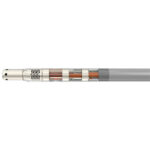
Defibrillating electrode: MRI compatible up to 3T, DF-4 connector, active fixation; presence of a steroid, standard electrode length of 59-64
cm, maximum electrode diameter of 7.3 Fr.
LV electrode: IS-4 connector, quadripolar; passive fixation; electrode length 86-95 cm.
Atrial electrode: MRI-compatible up to 3T, IS-1 Vi connector; fixation is active, presence of a steroid, standard lengths of 45-59 cm, the distance from the tip to the ring is no more than 11 mm, and the diameter of the electrode body is less than 2 mm.
Introducer bursting transcutaneous, 3 pieces, sizes – 7, 8, 9.5 Fr
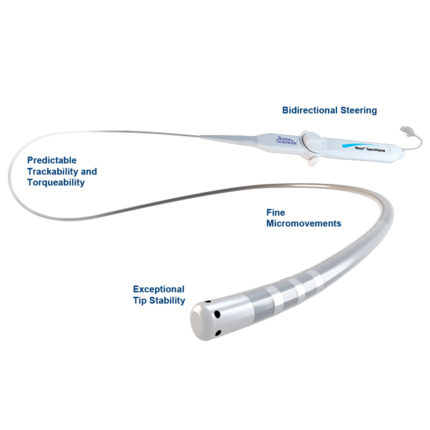
Delivery system for left ventricular electrode, outer part, diameter 9 Fr; length 50-59 cm, inner diameter 7.8 Fr, outer diameter 9.2 Fr,
curvature CS; dilator; introducer cutting knife.
Delivery system for left ventricular electrode, inner part, diameter 7 Fr; length 65-74 cm, inner diameter 6.3 Fr, outer diameter 7.4 Fr;
curvature 90-130°.
Conductor for delivery of left ventricular electrode with J-shaped tip and additional distal support – diameter 0.014 inches; length –
190 cm, curvature – CS-J.
Balloon catheter for venography – outer diameter 6 Fr; length – 90 cm.