
ИМПЛАНТИРУЕМЫЙ ЭЛЕКТРОКАРДИОСТИМУЛЯТОР ОДНОКАМЕРНЫЙ
Single-chamber implantable pacemaker (PACE)
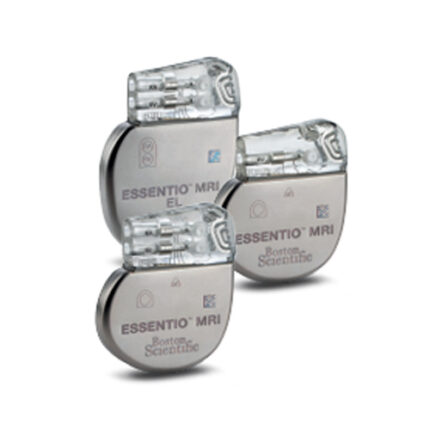
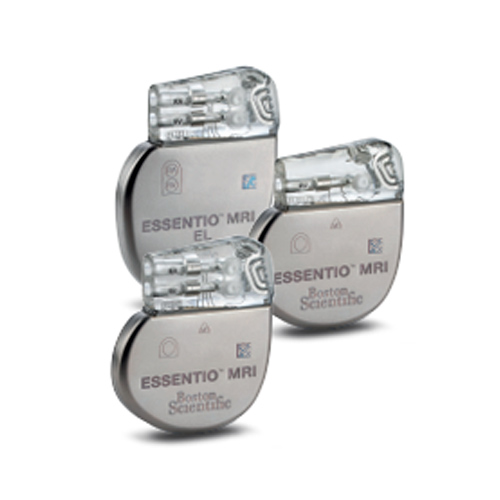
MRI-compatible single-chamber implantable pacemaker allows a patient with an implanted system to undergo 1.5T and 3T MRI scans, without restrictions on the scanning area (including the heart area) and the duration of the MRI scan procedure, provided that the device is implanted with MRI-compatible electrodes and the manufacturer’s requirements for MRI scans are met.
Device: connectors: IS-1; weight: 11.7 g; volume: 23.6 cm3; dimensions: 48.1 mm x 44.5 mm x 7.5 mm.
Materials in contact with human body tissues: titanium, polyurethane, and silicone rubber.
Body shape: physiological.
Connector with color-coded port indicators.
The device’s battery has a useful capacity of 1.0 Ah.
The estimated service life is 10.8 years under the following conditions: 100% stimulation, base frequency of 60 per
minute, pulse duration of 0.4 ms, electrode impedance of 750 ohms, stimulus amplitude of 2.0 V;
accelerometer is ON; VSEG recording is constantly ON.
Wireless telemetry and wireless ECG function.
Functions available: automatic measurement of the stimulation threshold and automatic change of stimulation parameters when the threshold is changed.
The function of frequency adaptation.
The presence of two sensors – an accelerometer and a physiological sensor for minute ventilation.
The ability to mix data from two sensors to optimize frequency adaptation.
The function of smoothing the rhythm frequency up and down, independently programmable (Rate Smoothing Up/Down).
Automatic implantation detection function.
Fully automatic post-implantation checkup function.
Automatic programming function based on readings (IBP).
Stimulation modes: AAI(R); AAI; VVI(R); VVI; AOO; VOO; OFF.
MRI protection mode programming function (MRI Protection Mode).
MRI tim-out programming function (MRI Tim-out).
Stimulation parameters:
Stimulation amplitude: Auto or Fix, 0.1 – 7.5 V.
Pulse width: 0.1-2.0 ms.
Automatic amplitude measurement and sensitivity threshold adjustment.
Sensitivity: Auto (AGC) or Fixed, 0.15-1.5 mV.
The polarity of the stimulation is mono/bipolar.
Maximum sensory frequency (MSR) – 50-185/min.
The maximum stimulation frequency (MPR) is 50-185/min.
Audio warning signals: when the electrode/device is damaged (when the electrode impedance exceeds the limits), when the recommended battery replacement time is reached.
The diagnostic trend function provides an overview of the implanted system and the patient’s condition over the previous 12 months, with graphs that display long-term clinical trends in the patient’s condition and the performance of the device and electrodes, such as the frequency of arrhythmias, heart rate, and patient mobility.
An algorithm for recognizing electromagnetic noise on electrodes.
An algorithm for triggering an alarm when an electrode is damaged.
Function for switching the polarity of the electrodes (Safety Switch).
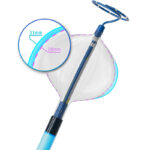
Atrial/ventricular electrode: MRI-compatible up to 3T, IS-1 Vi connector; active fixation, presence of a steroid, standard lengths of 45-59 cm,
The distance from the tip to the ring is no more than 11 mm, and the diameter of the electrode body is less than 2 mm.
Percutaneous discontinuous introducer, 1 piece, size 7 Fr.